
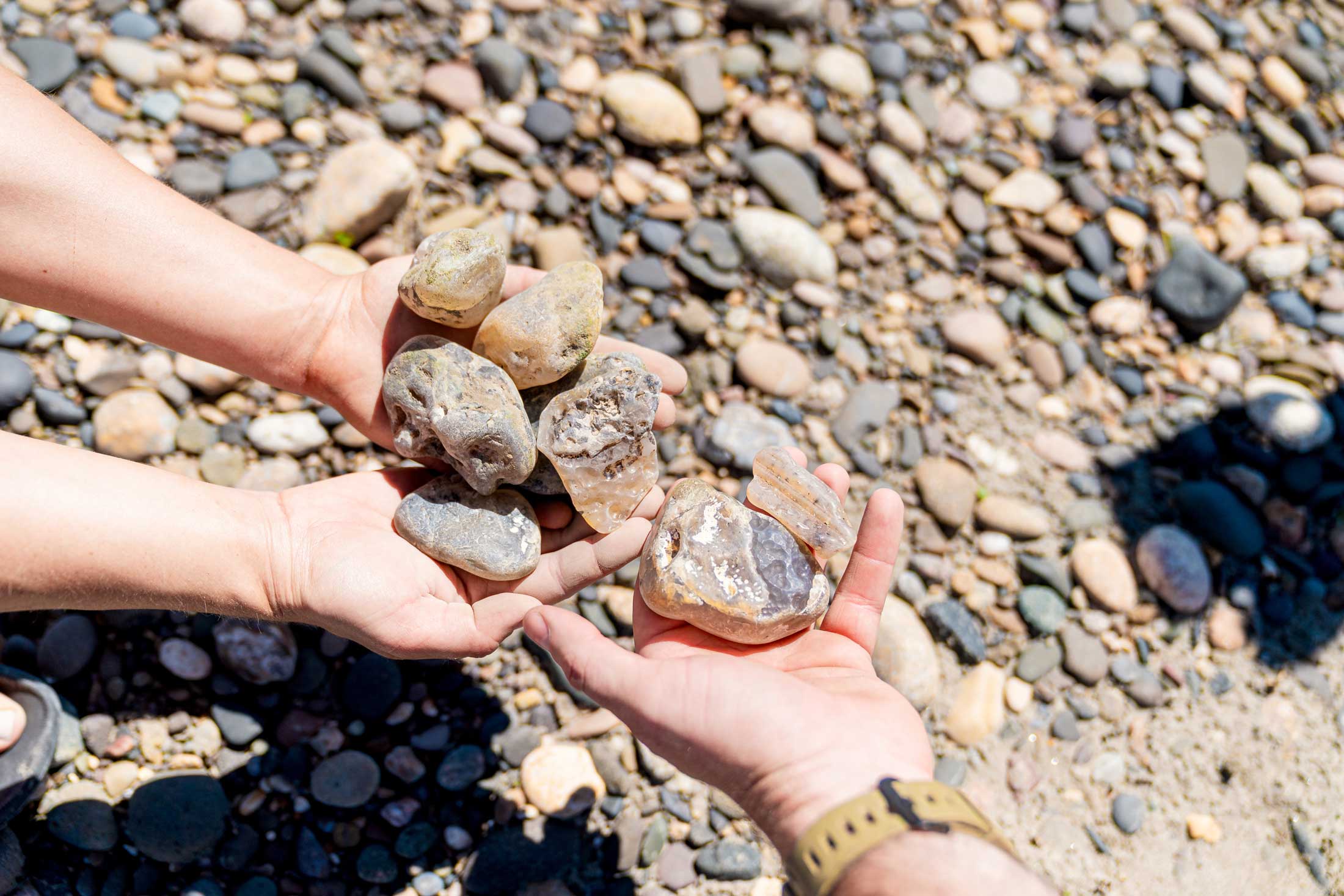
The Yellowstone River cuts through Southeast Montana’s plains and breaks. Along its shifting gravel bars and sandy shores, rockhounding is a favorite pastime for locals and visitors alike.
As you explore the hills and shoreline, you may spot fossils, jasper, petrified wood, quartz and the region’s true gem: Montana moss agate. Found only along the Yellowstone River and its tributaries, each agate reflects ancient landscapes shaped by ever-changing currents.
The search is part of the reward. Rockhounding is free, accessible and a simple, meaningful way to connect with Southeast Montana’s natural history.
NOTE: Always use caution when stepping into the Yellowstone River—its currents can run stronger than they appear, even in calm or shallow spots. Stay mindful of uneven or shifting ground, move with intention, and rely on proper gear and attire to keep your adventure safe and enjoyable.
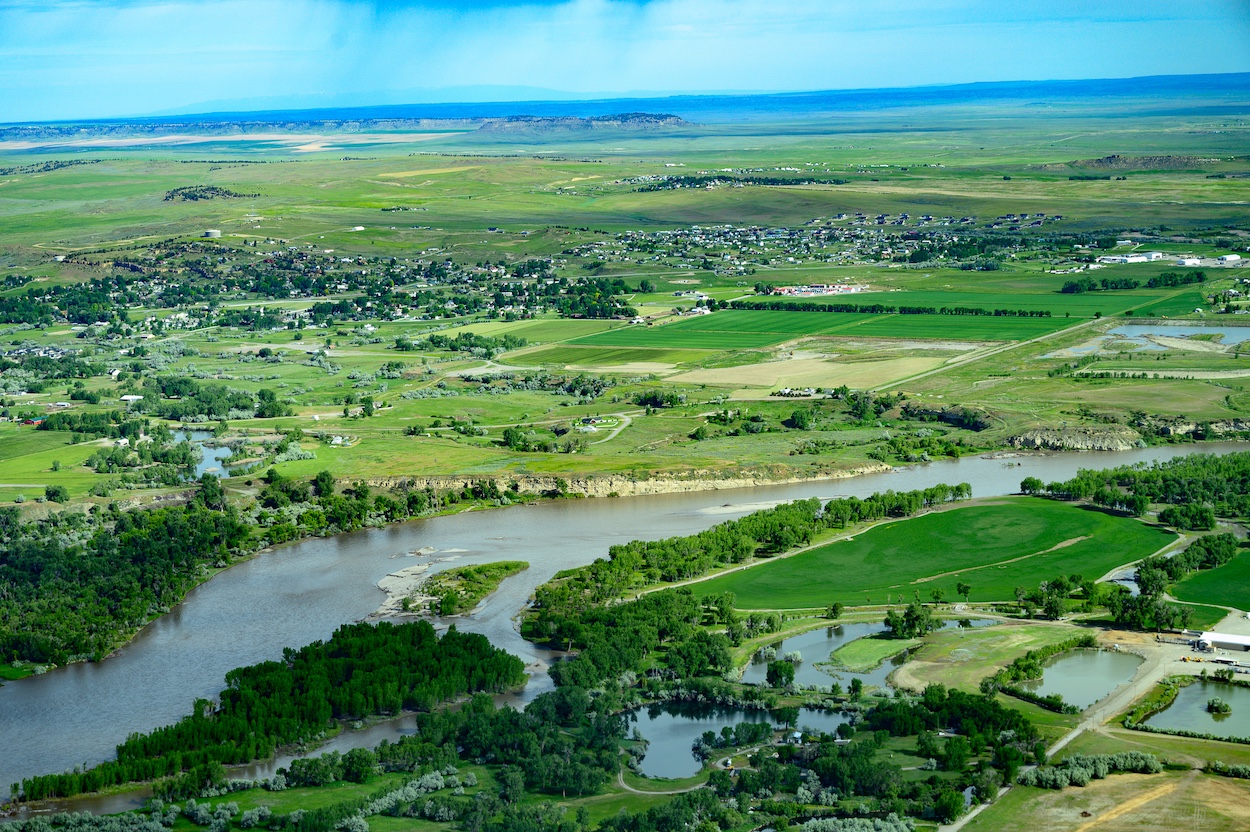 Yellowstone River, Donnie Sexton
BILLINGS (RIVERFRONT PARK) — AGATE
Gravel bars along the Yellowstone River near Riverfront Park regularly yield river-polished agate, jasper, chert and pieces of petrified wood. Finds are often subtle in color and texture, so slow, careful searching pays off. Seasonal changes in water level can dramatically shift what is exposed from year to year.
Best for: Mixed Yellowstone River agate
Location: Riverfront Park, Billings
Terrain: Riverbank and gravel bars
Tip: Visit after water levels drop in late summer or fall for newly exposed material.
FALLON — AGATE
Gravel bars along the Yellowstone River near the Fallon boat launch regularly produce agate polished by the current. This is a simple, easy-access stop right off the interstate with plenty of riverbank to explore. Finds tend to be subtle, so slow searching helps.
Best for: Yellowstone River agate
Location: Fallon boat launch (south of I-94)
Terrain: Riverbank and gravel bars
Tip: Walk downstream from the launch where fresh deposits often accumulate.
FORSYTH — AGATE
Gravel bars along the Yellowstone River near the Rosebud Recreation Area frequently yield agate, jasper and petrified wood polished by the current. The broad bends of the river here concentrate material in predictable spots after seasonal flows. This is a pleasant, open stretch of river that rewards patient searching.
Best for: Yellowstone River agate
Location: Rosebud Recreation Area, Forsyth
Terrain: Riverbank and gravel bars
Tip: Check inside bends and lower bars where stones naturally collect.
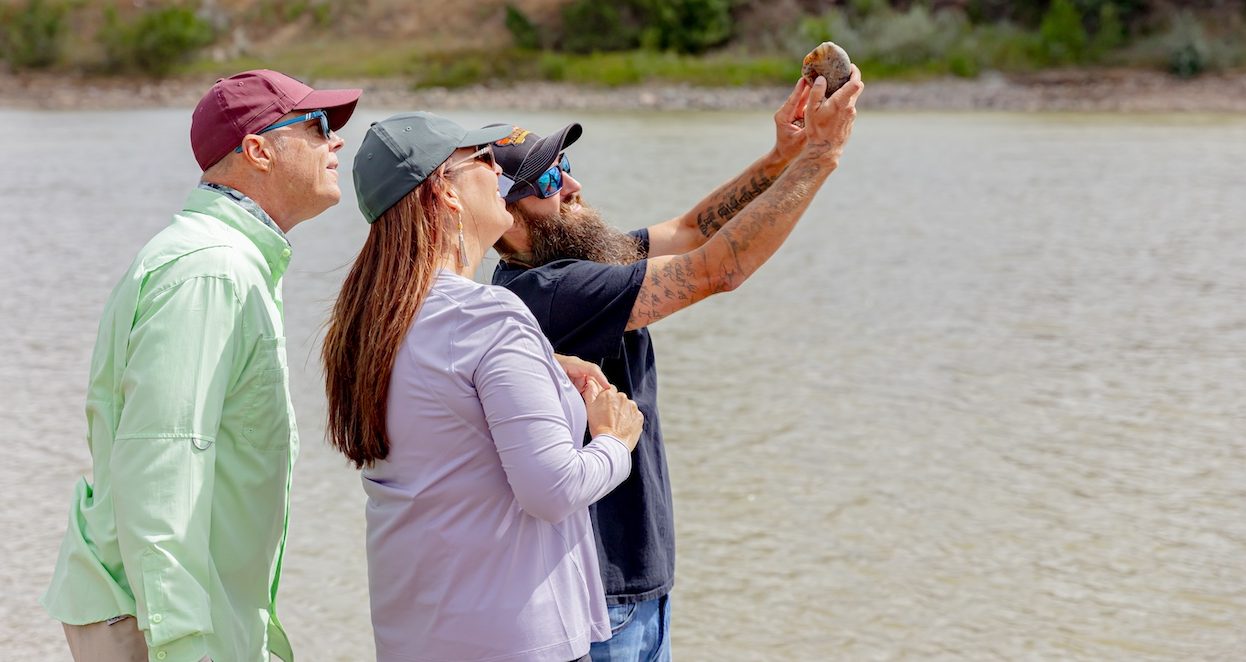 Agate Hunting on the Yellowstone River, RV There Yet TV
GLENDIVE (BLM LAND NEAR MAKOSHIKA) — FOSSILS
Hillsides on BLM land south of Glendive contain marine fossils in shale, along with petrified wood, agate, iron and sandstone concretions, and occasional selenite or barite crystals. The landscape is open and rolling, making it easy to wander while you scan for exposed specimens. (Note: collecting is prohibited inside Makoshika State Park.)
Best for: Marine fossils and mineral specimens
Location: South of Glendive near the Short Pine OHV area (BLM land)
Terrain: Badlands and open hillsides
Tip: Start near existing pullouts and follow natural ridgelines where material is most visible.
INGOMAR — FOSSILS + PETRIFIED WOOD
Roadcuts just west of Ingomar reveal layers that can produce fossils, petrified wood and iron concretions. The exposures are easy to access from US 12, making this a straightforward stop for a quick hunt. Look for weathered pieces that have already eroded out of the slope.
Best for: Mixed fossils and petrified wood
Location: West of Ingomar along US 12 (near Mile 227)
Terrain: Hillside roadcut
Tip: Scan the base of the cut first—gravity does much of the work for you.
LAUREL — AGATE
The Yellowstone River near Riverside Park in Laurel offers accessible gravel bars where agate, jasper and petrified wood commonly turn up. This is a good beginner-friendly stretch of river with plenty of space to wander. Keep an eye out for smooth, translucent stones that stand out from the surrounding gravel.
Best for: Agate and river-polished material
Location: Riverside Park, Laurel
Terrain: Riverbank and gravel bars
Tip: Walk both wet and dry bars—different material tends to collect in each.
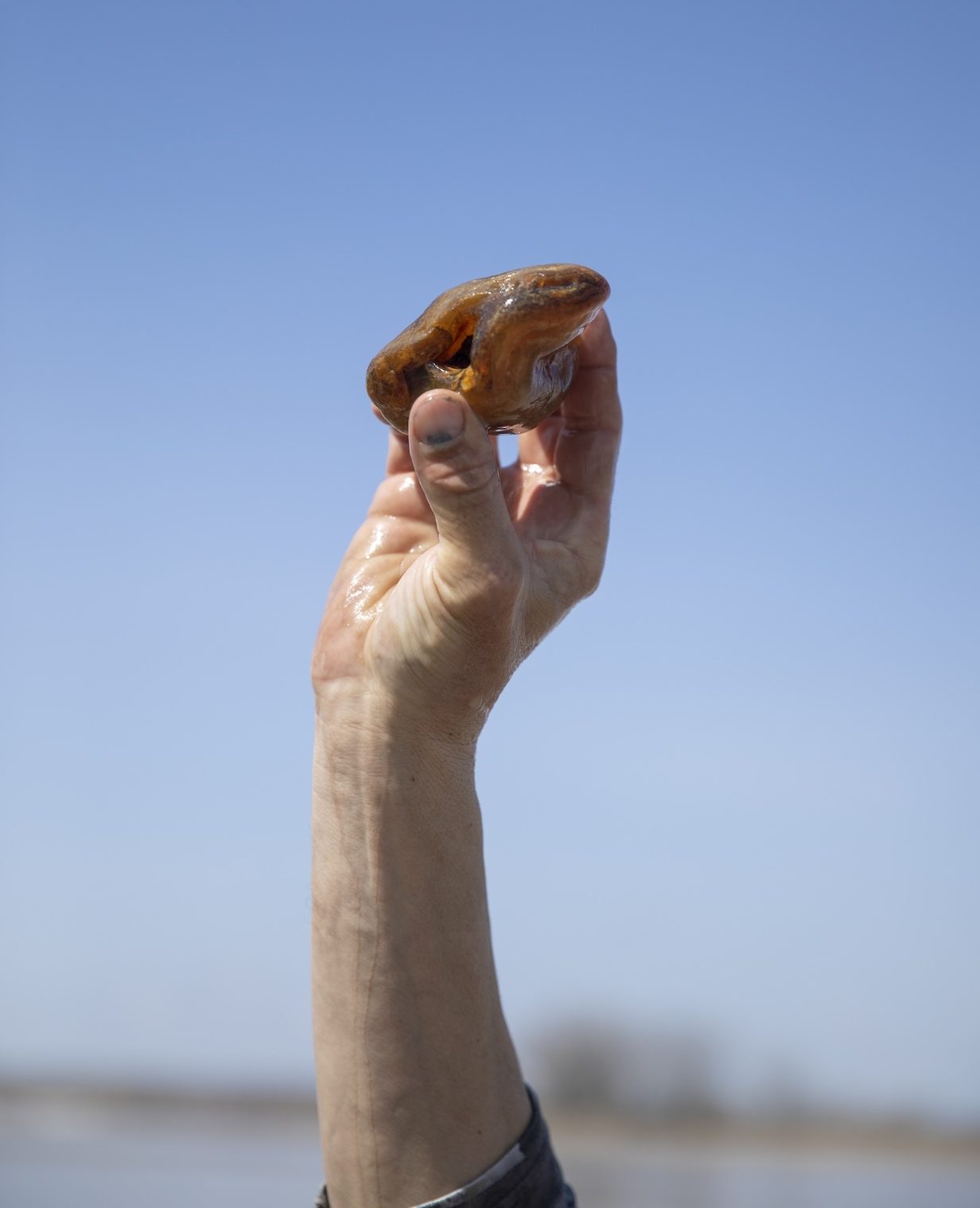 Agate, Yellowstone River, Cassie Solberg
LAVINA — FOSSILS
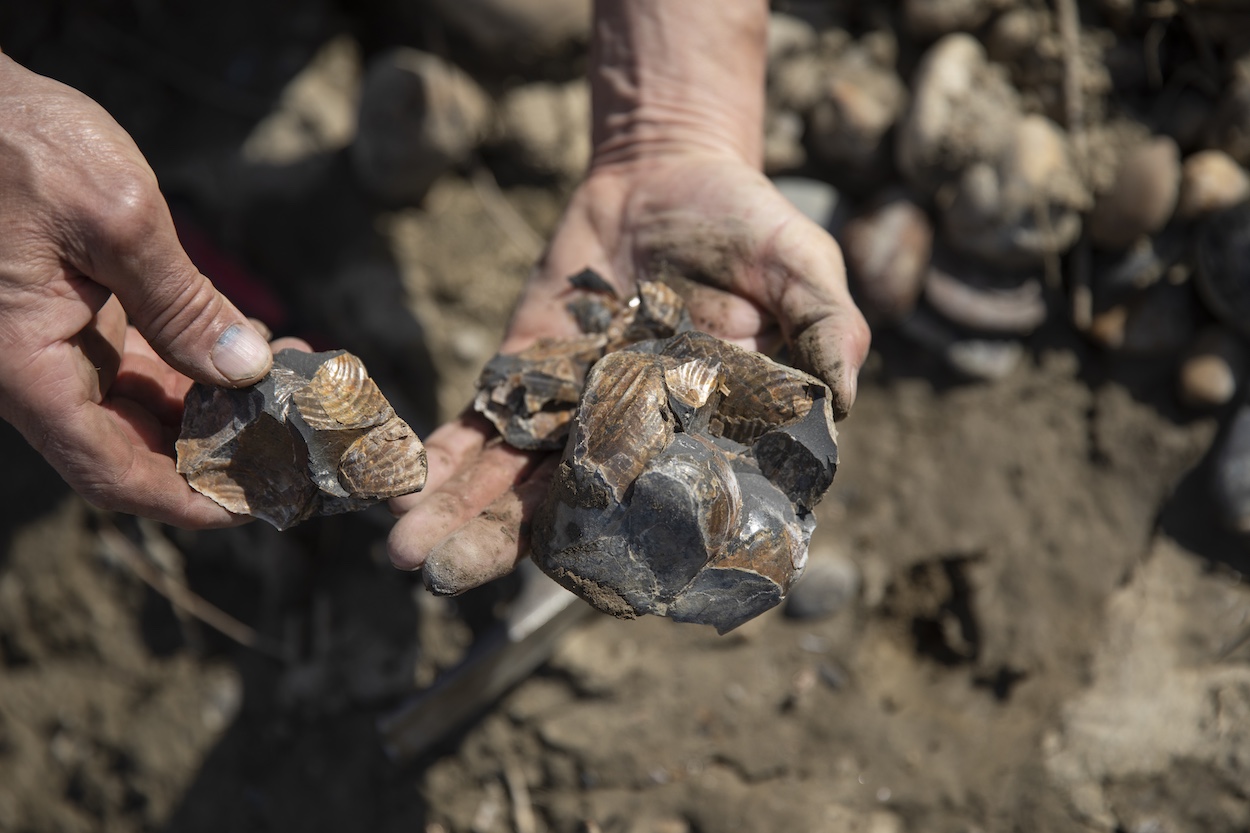
A short roadcut south of Lavina exposes layers of shale and lignite that contain well-preserved fossilized oysters. The fossils are concentrated in the northwest portion of the outcrop beneath a darker band of rock, making them easier to spot once you know where to look. This site offers a clear window into Montana’s ancient marine past.
Best for: Marine fossils (oysters)
Location: South of Lavina along MT 3
Terrain: Hillside roadcut
Tip: Look just below the dark lignite layer for the densest fossil beds.
MILES CITY — FOSSILS
Hills just east of the I-94/US 12 junction expose rock that can contain marine fossils along with occasional agate and chalcedony. Finds tend to be scattered, so covering ground slowly is key. The setting offers wide views of the breaks as you search.
Best for: Marine fossils with occasional agate
Location: East of I-94/US 12, Miles City
Terrain: Open hillsides
Tip: Focus on naturally eroded slopes rather than fresh, intact rock faces.
 Cassie Solberg
ROUNDUP/MELSTONE — FOSSILS
Long stretches of fossil-bearing roadcuts between Roundup and Melstone expose alternating layers of sandstone and shale rich in marine fossils. Material appears intermittently along several miles of highway, so it’s worth checking multiple pullouts. The most productive sections are generally in the middle of the stretch between the two towns.
Best for: Widespread marine fossils
Location: US 12 between Roundup and Melstone
Terrain: Roadcut along highway
Tip: Bring sturdy shoes and stay well clear of traffic while you search.
STRAWBERRY HILL — PETRIFIED WOOD
Badlands terrain east of Miles City contains pieces of petrified wood and iron concretions weathering out of the soft sediment. The colorful, sculpted landscape makes this as much a scenic outing as a rockhounding stop. Material is often partially exposed on gentle slopes.
Best for: Petrified wood
Location: Southeast of Miles City along US 12
Terrain: Badlands
Tip: Look for rounded, wood-like shapes that contrast with the surrounding clay.
TERRY (CHERRY CREEK) — AGATE
Gravel bars along Cherry Creek hold a mix of agate, jasper, chalcedony, chert, petrified wood, and occasional fossils. Public land along the northwest side of the creek offers room to explore upriver at a relaxed pace. The nearby backcountry byway adds dramatic badlands scenery to your trip.
Best for: Variety of river-tumbled material
Location: Cherry Creek north of Terry
Terrain: Creekside gravel bars
Tip: Search both wet and dry bars—different materials settle in each.
NOTE: A Montana Conservation License is required for everyone age 12 and older to access most state lands, including wildlife management areas, fishing access sites and wildlife habitat protection areas, and all types of recreation—launching watercraft, hiking, biking, wildlife viewing, etc. State parks are excluded from this requirement. Learn more here.