Jaime Blotske
Not every great dinosaur trip needs a week. Glendive packs two Montana Dinosaur Trail stops, a world-class state park and one of the most fossil-rich geological formations on the planet into a town you can drive across in five minutes. If you’ve got one day and you want to spend it in the deep past, this is the itinerary.
 Courtesy of Frontier Gateway Museum
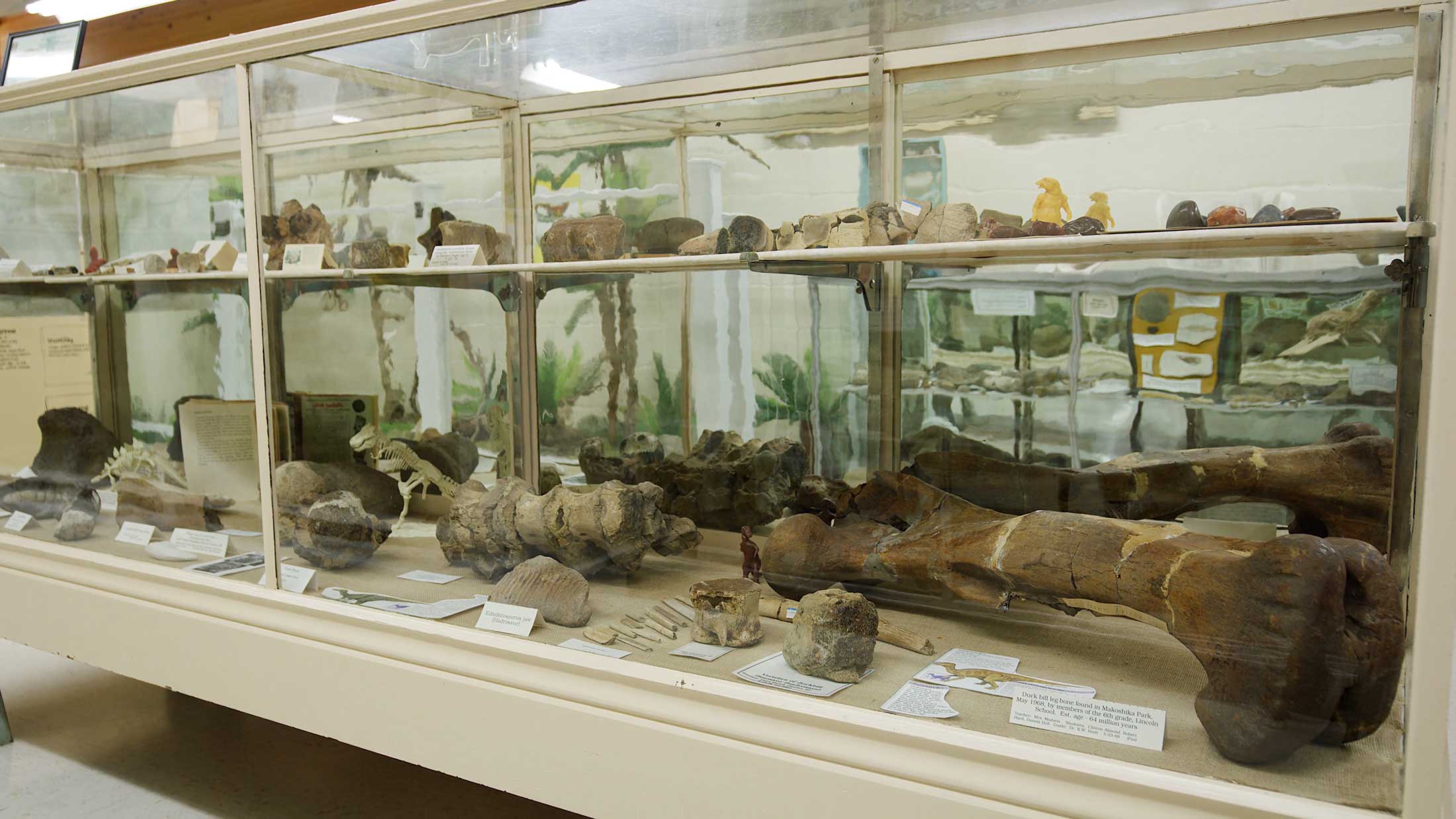
Start downtown at the Frontier Gateway Museum on State Street. This is one of the first official stops on the Montana Dinosaur Trail—pick up your passport here and get it stamped before you head out. The museum’s headliner is Margie, a full-size skeleton cast of a Struthiomimus found near Glendive in the early 1990s. Lean, long-legged and built for speed—she could hit 50 miles per hour—Margie is one of the more arresting dinosaurs you’ll meet in any Montana museum. She’s accompanied by a solid fossil collection from the surrounding Hell Creek Formation: Triceratops, Thescelosaurus, hadrosaurs and aquatic species pulled from ground that was once the floor of an ancient inland sea.
The museum is compact and easy to take your time through. Plan on an hour, maybe a bit more if you linger with the exhibits.
 Agate Hunting on the Yellowstone River, RV There Yet TV
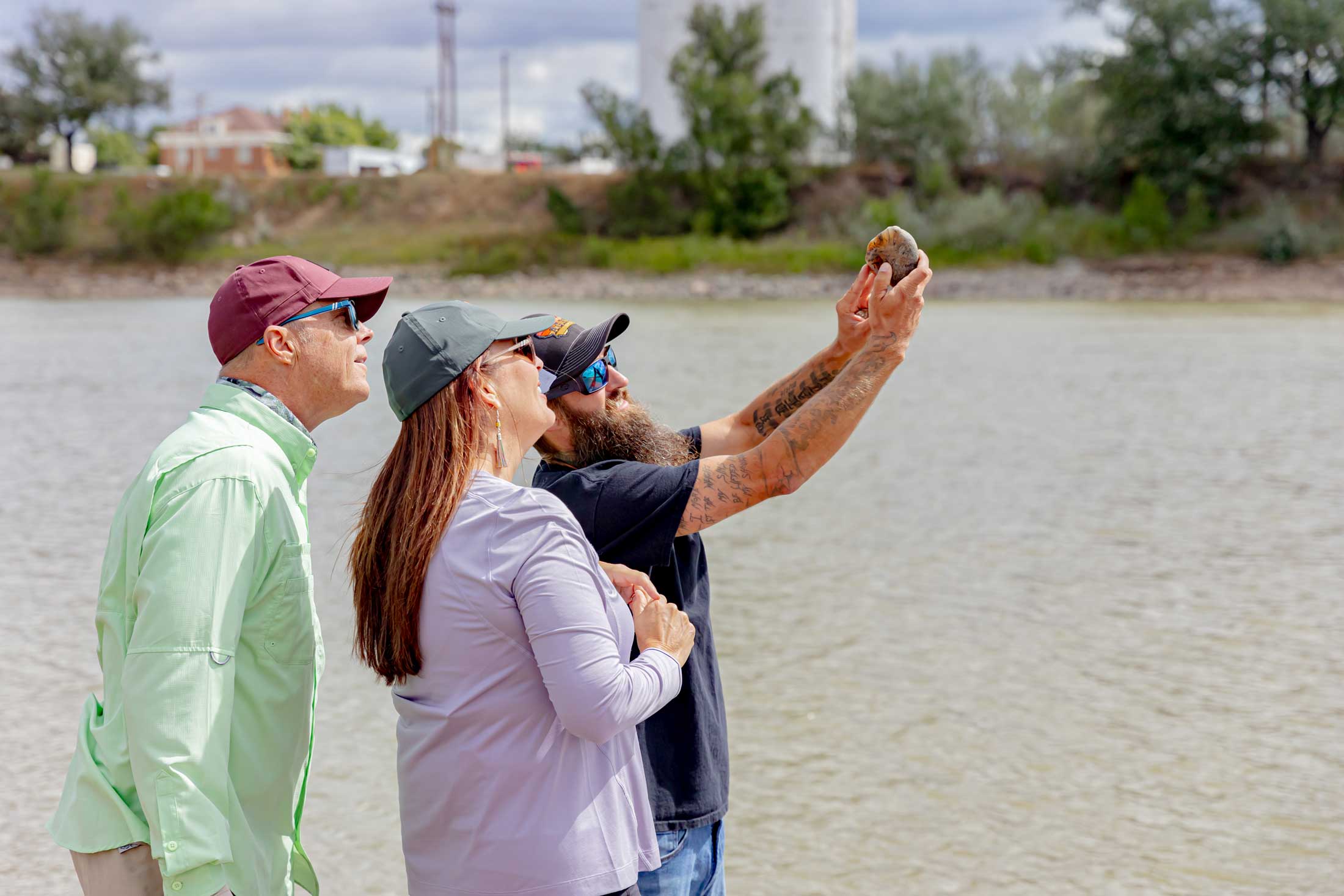
Grab lunch in town before heading up into the badlands. Glendive sits right on the Yellowstone River, and the downtown has real character—take a short walk along the riverbank before you go. The river is known for its agate hunting, and the views from the bank give you a sense of the landscape before the canyon walls take over.
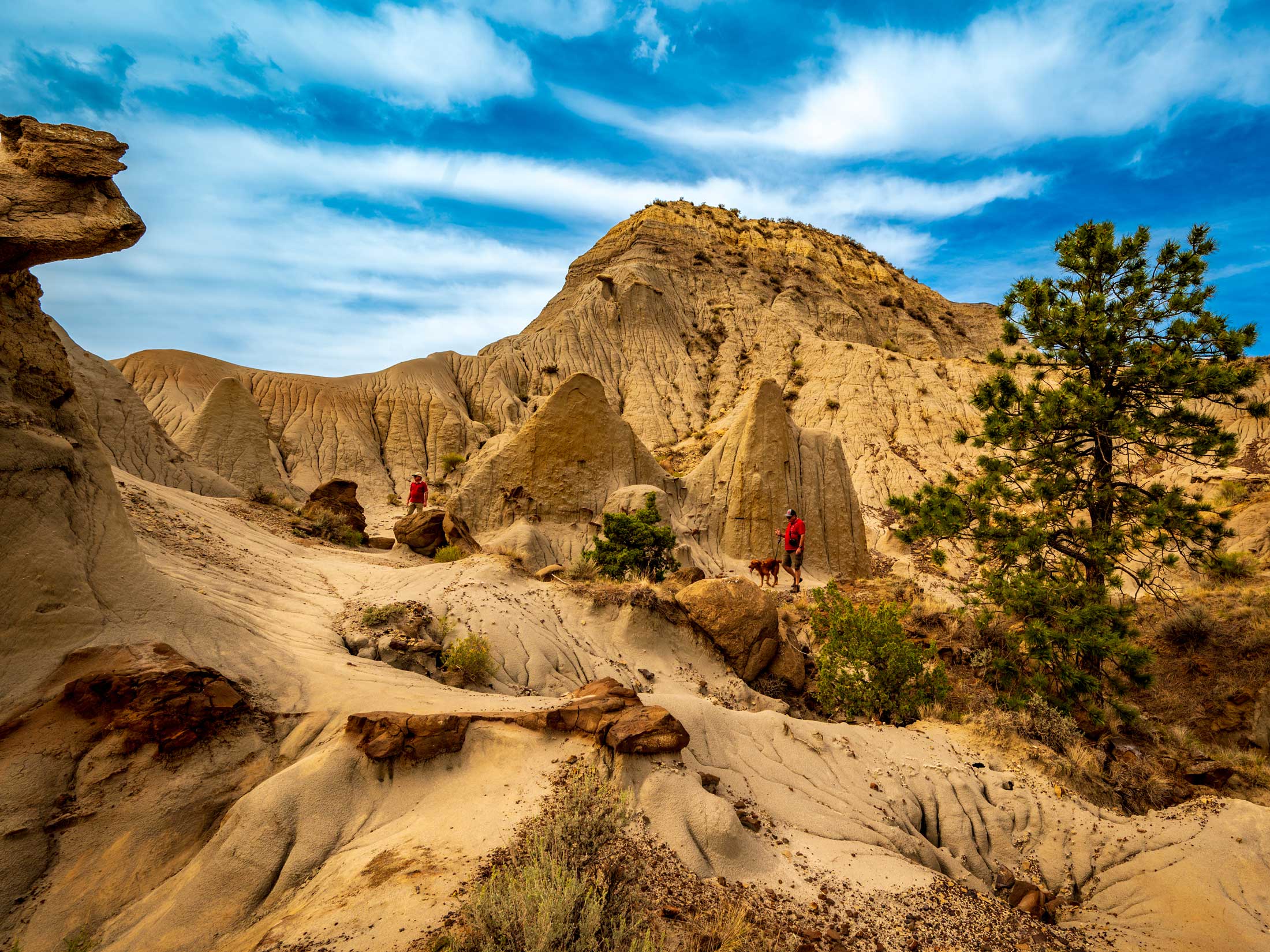 Makoshika State Park, Kathryne Ann Photography
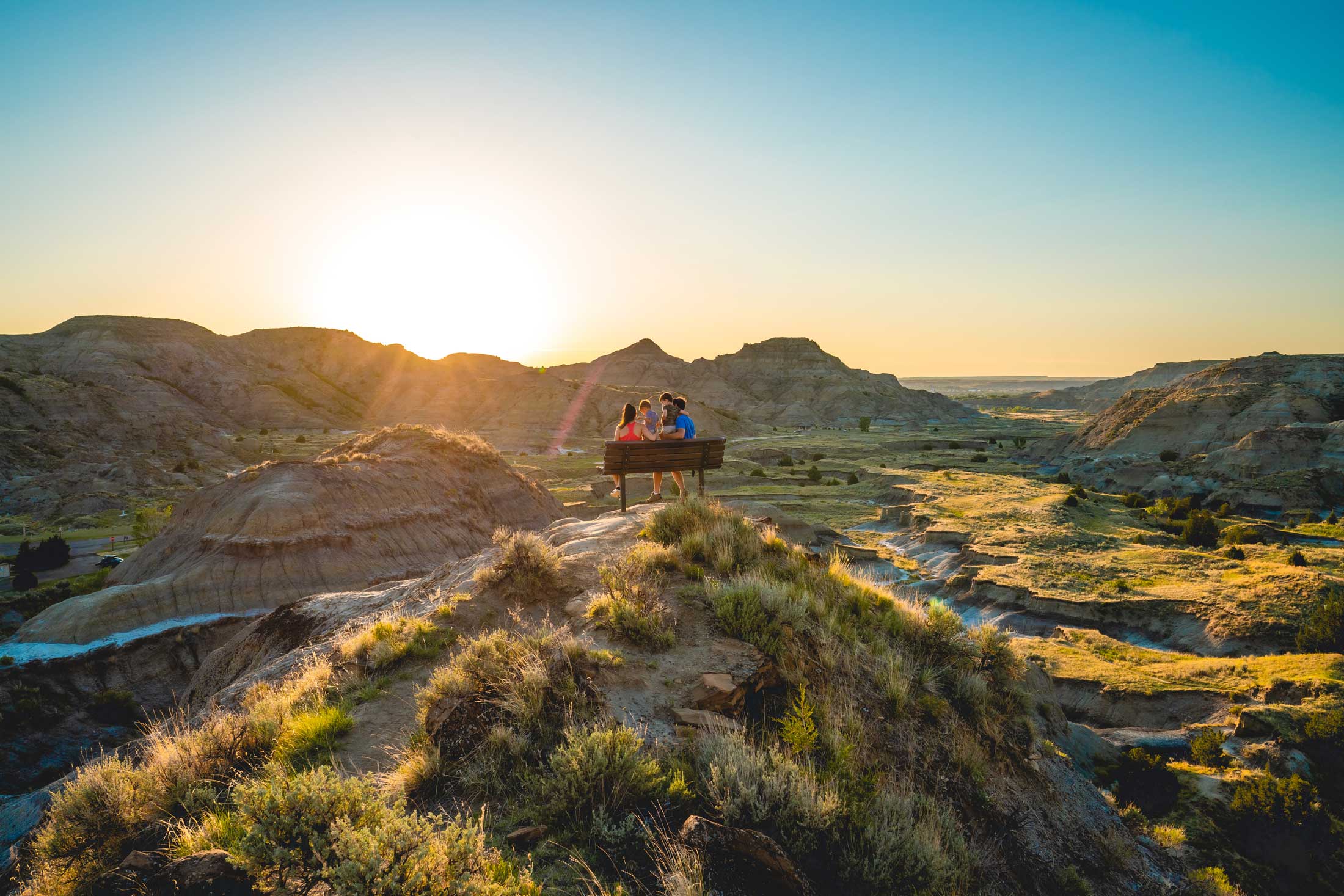
Head southeast from downtown—it’s only a few minutes by car—into Makoshika State Park. Montana’s largest state park covers more than 11,500 acres of Hell Creek Formation badlands, and the scale of it hits you immediately: hoodoos, caprocks, eroded canyon walls layered in amber and rust, and a horizon that seems to go on indefinitely.
Start at the visitor center. It’s compact but excellent—an actual Triceratops skull, T. rex fossil, and interpretive displays on the formation and its paleontology history. More than ten species of dinosaurs have been discovered within the park, and researchers from major universities return every summer to look for more. The fossils keep appearing as the badlands erode; you’re looking at a landscape that’s still actively giving up its past.
For a hike, the Cap Rock Trail is short and delivers one of the park’s most photogenic formations. If you have a couple of hours and want to go deeper, the Diane Gabriel Trail winds through the badlands grasslands and ends at a hadrosaur fossil displayed in the hillside where it was found. Scan the canyon walls for golden eagles and turkey vultures—both are common—and watch for mule deer in the lower sections of the park as the afternoon cools.
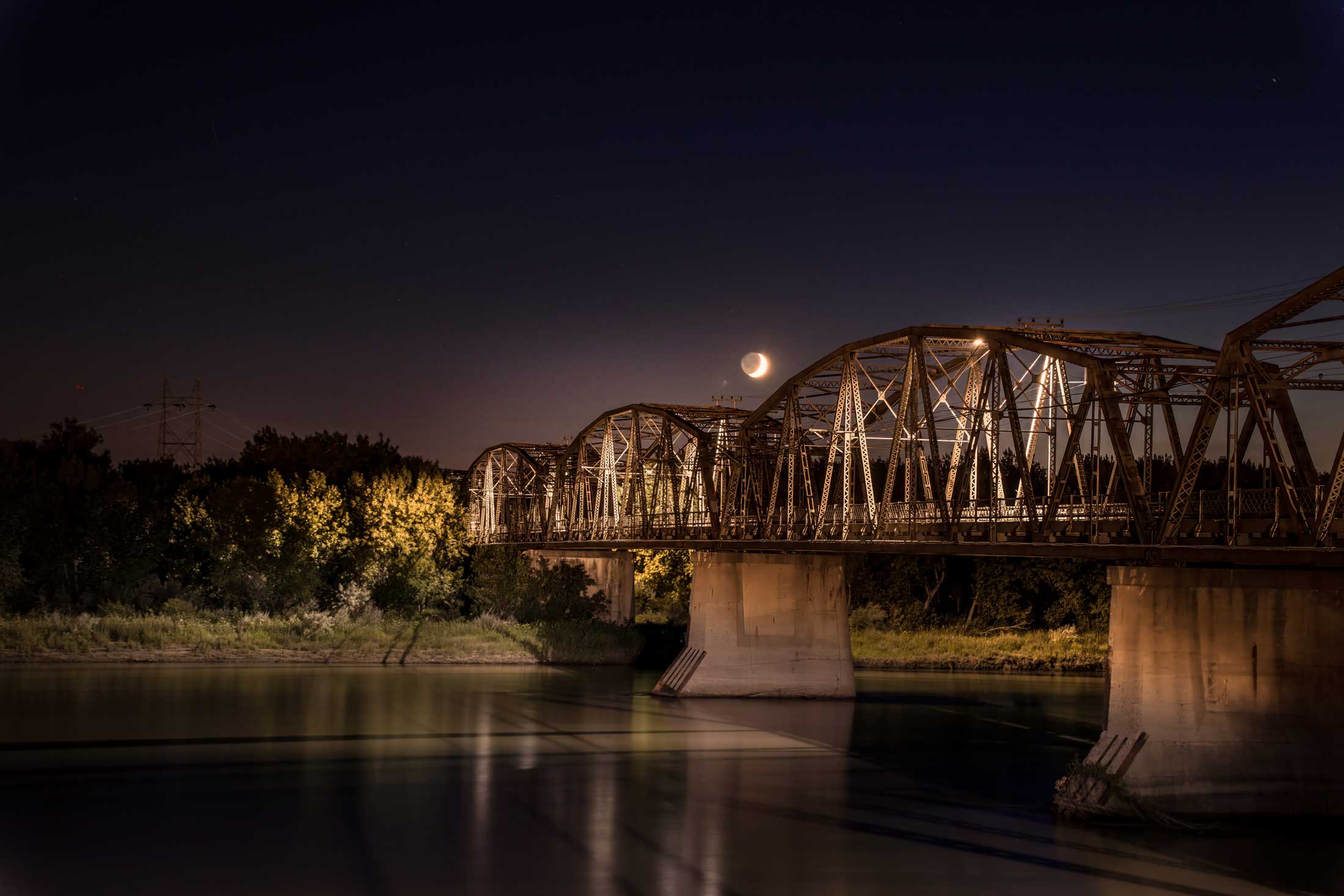 Bell Street Bridge on the Yellowstone River, Glendive, Kristi Powell
Return to Glendive for dinner. The Yellowstone at evening light is a good reason to take your time—wide, slow-moving and backed by the ridgeline of the badlands you just walked through. It’s the kind of ending a dinosaur day deserves.
Extending your trip? Carter County Museum in Ekalaka is 109 miles south (1.75 hours), and the Musselshell Valley Historical Museum in Roundup is about 3 hours west. Both are stops on the Montana Dinosaur Trail.