Courtesy of Carter County Museum
Ekalaka, population 400, is one of the most unlikely paleontology capitals in the American West. The Carter County Museum—Montana’s first county museum and the state’s first dinosaur museum—has been pulling world-class fossils from the surrounding badlands since 1936, and it shows. The Hell Creek Formation here has produced some of the finest and most unusual specimens ever found, and the scientists who study them come back year after year. A stop in Baker at the O’Fallon Historical Museum adds a second fossil-rich museum to the mix.
Start your trip in Baker, a classic eastern Southeast Montana ranch town that makes a natural gateway to Carter County. Before you head south, stop at the O’Fallon Historical Museum—a Smithsonian affiliate spread across six historic buildings, including the original 1916 Fallon County Jail. The fossil exhibit here includes locally found Triceratops and hadrosaur specimens, a solid preview of what’s ahead. The museum is free, and the staff know their county well.
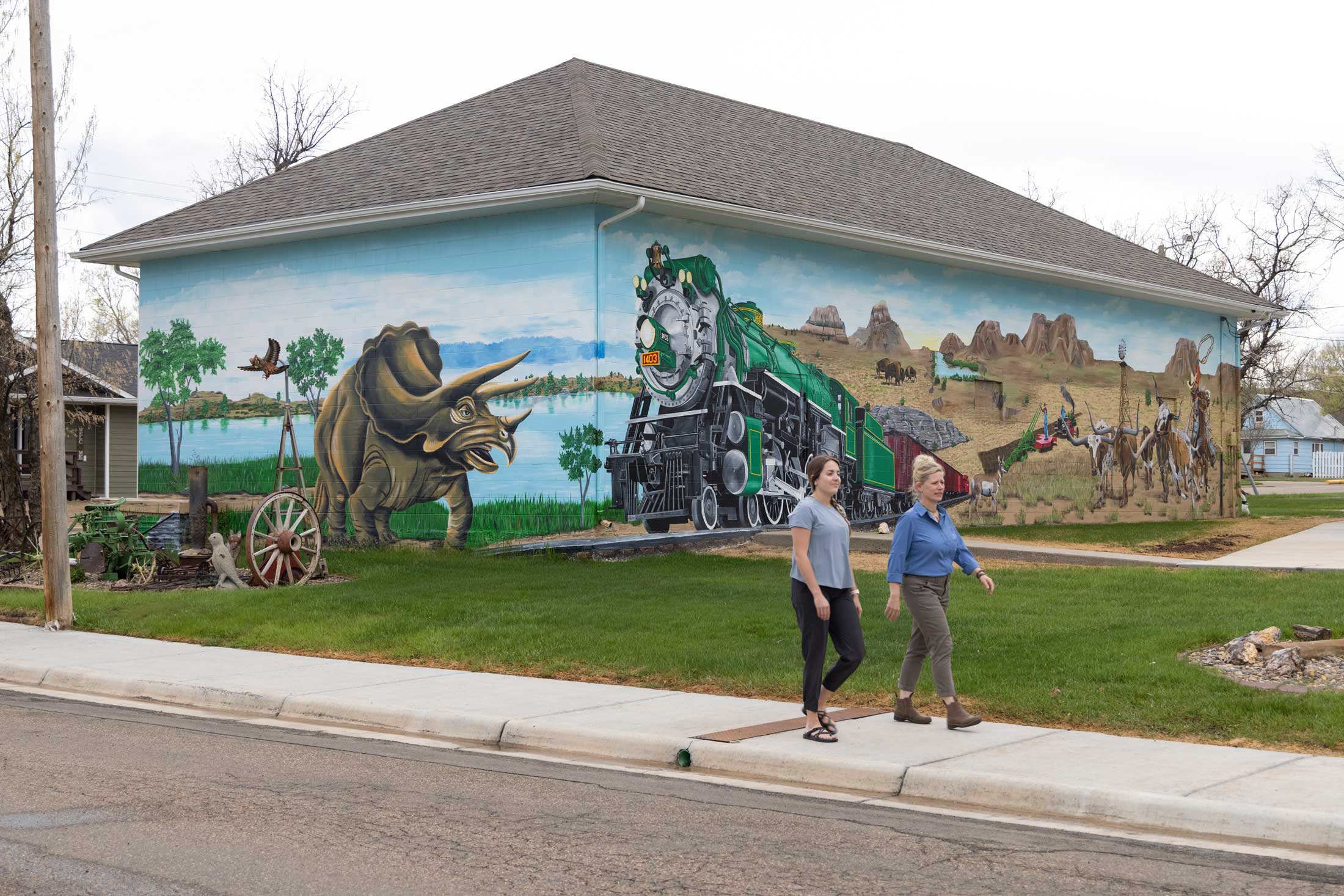 O’Fallon Historical Museum, Nathan Satran Photography
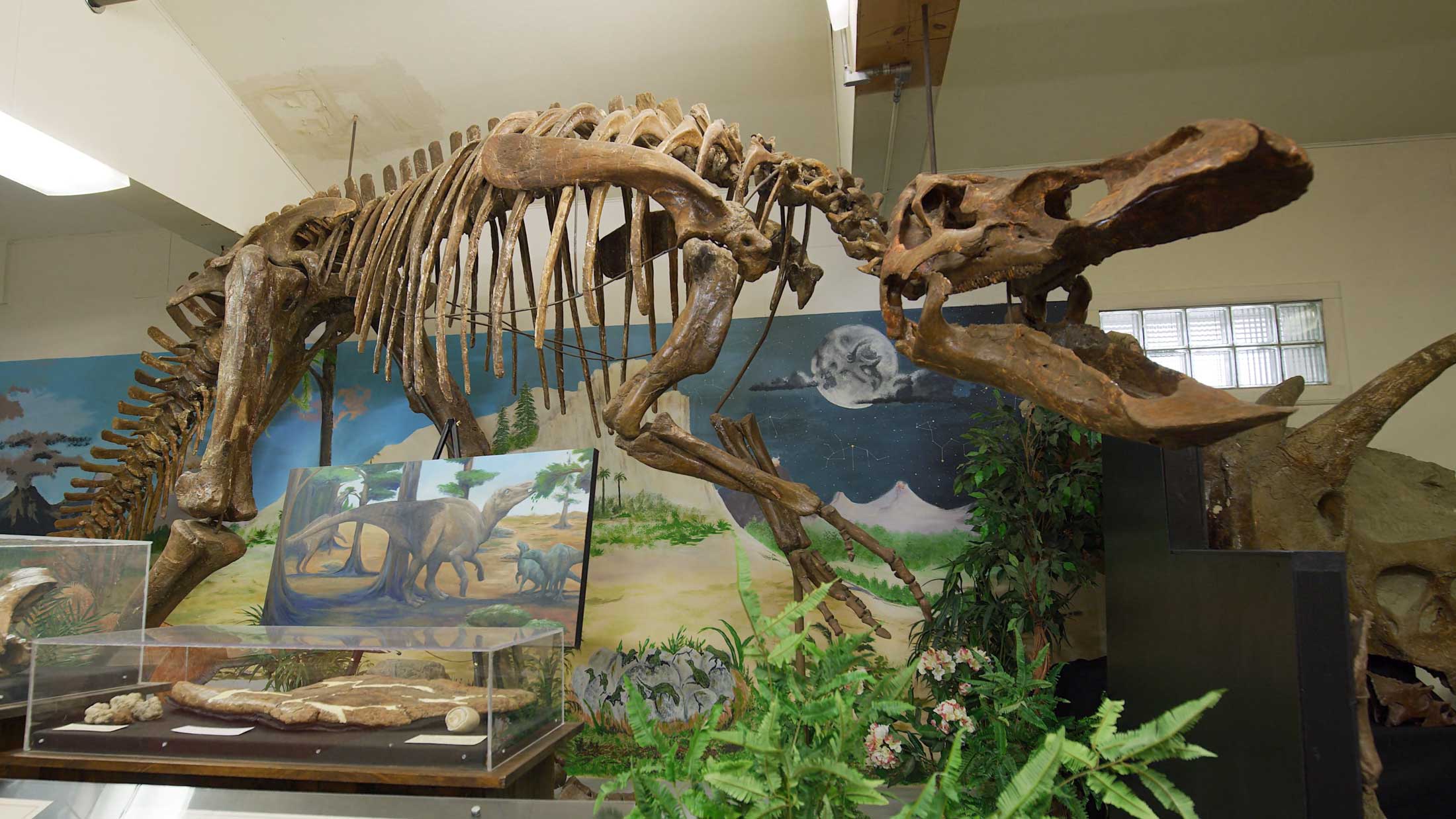
From Baker, it’s about 35 miles south on Highway 7 to Ekalaka—a drive that gets more dramatic as the badlands terrain closes in. Grab lunch in Ekalaka and spend the afternoon at the Carter County Museum which anchors the town’s Main Street and is worth every minute you give it. Established in 1936 and housed in a former automotive garage, the museum covers nearly 90 million years of regional history—from the Western Interior Seaway through the K-Pg extinction boundary and beyond. The paleontology collection is the centerpiece: fully mounted skeletons of a T. rex (including “Wyrex,” a bob-tailed specimen unique to the collection) and an Edmontosaurus, a complete Triceratops skull, mounts and casts of pachycephalosaurs, mosasaurs and a pterosaur—the only known specimen from the Hell Creek Formation. The giant hadrosaur on display is one of only about five of its kind found in the entire United States.
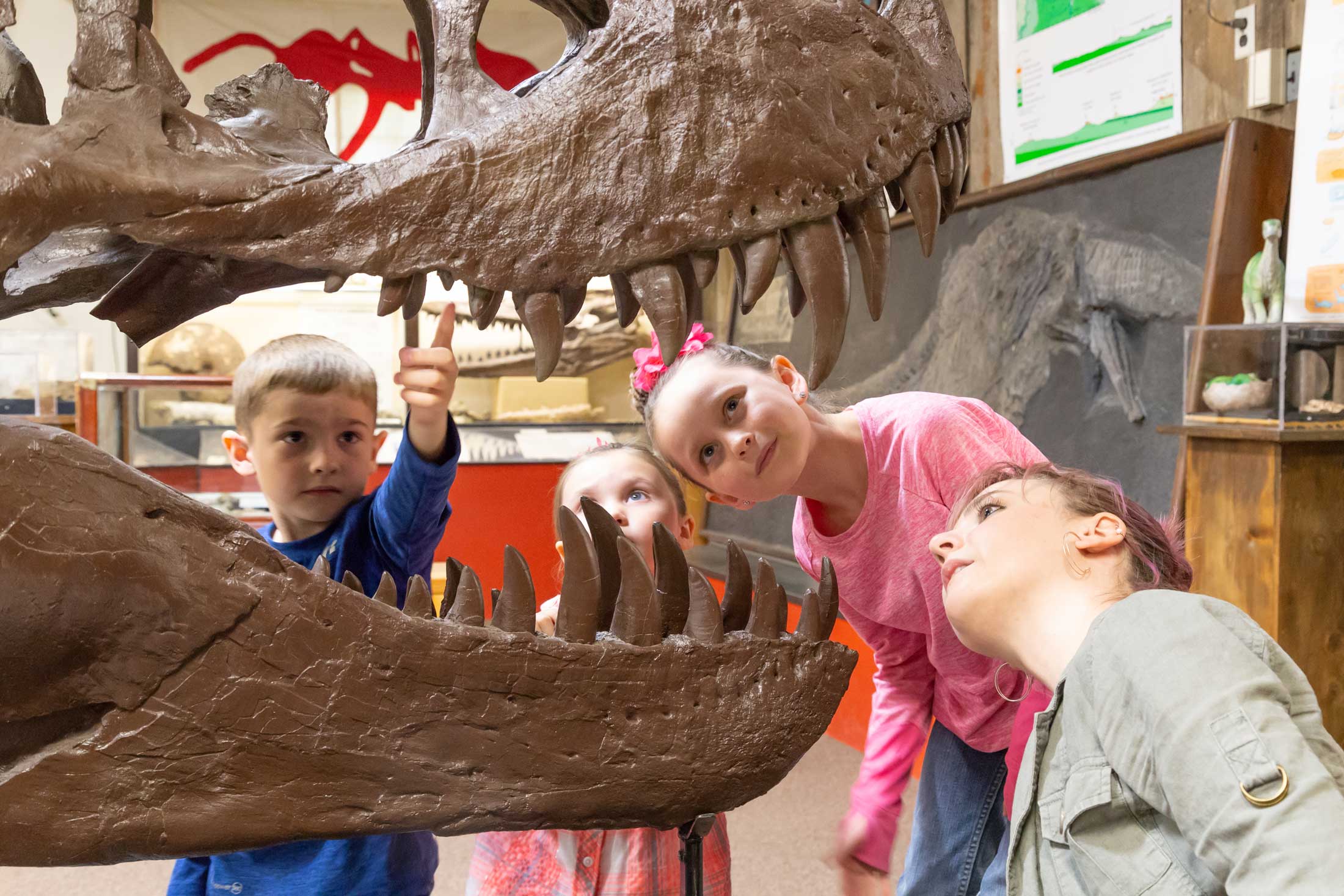 Carter County Museum, Nathan Satran Photography
The museum also runs active fossil digs in the surrounding Hell Creek Formation. If your timing is right, check whether field programs or public dig opportunities are available. And if you’re visiting at the end of July, plan around the Annual Dino Shindig—two days of talks by leading paleontologists, fossil field expeditions, a street dance and family activities that earned the designation of Montana’s Event of the Year.
Overnight in Ekalaka or Baker.
Spend the morning exploring the Medicine Rocks area, just north of Ekalaka. The wind-eroded sandstone formations are bizarre and beautiful—honeycombed columns and sculpted towers that cast long shadows in the early light. This is also an International Dark Sky Sanctuary, one of only a handful in the world, so if you’re staying an extra night, the stars above Medicine Rocks are extraordinary.
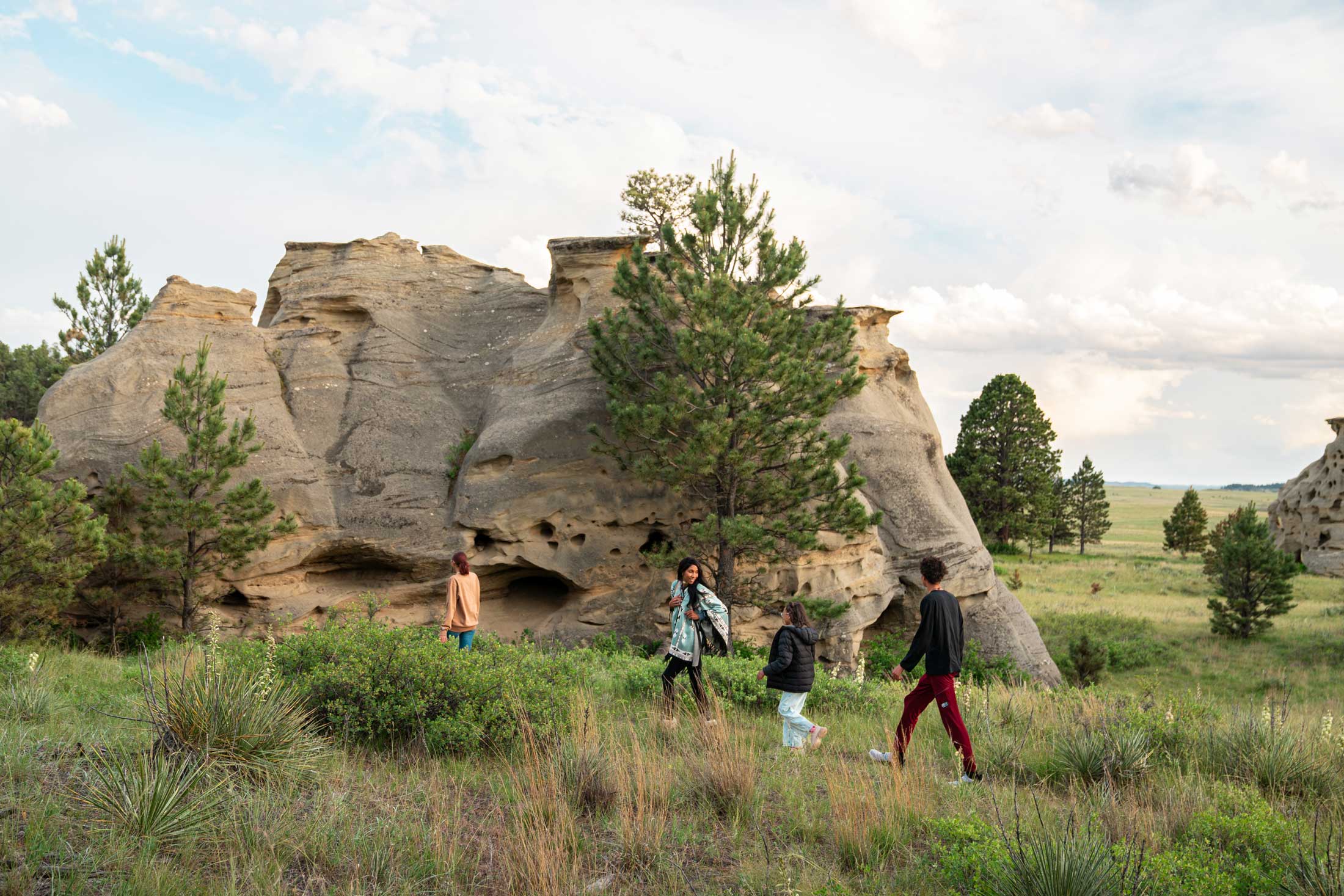 Medicine Rocks State Park, Visit Southeast Montana
Take the informal trails through the rock formations before the day heats up. Mule deer, pronghorn and a wide variety of birds call this area home, and the morning is the best time to see them. The landscape here feels genuinely remote and ancient—which, geologically speaking, it is.
Before heading home, swing back through Ekalaka or Baker for a final meal. The Carter County Museum has a gift shop if you need a reminder of what’s buried underfoot in this corner of Montana.
Also nearby on the Montana Dinosaur Trail: Frontier Gateway Museum and Makoshika State Park in Glendive (109 miles, 1.75 hours via I-94 west from Wibaux).