RV There Yet TV
Glendive may be the most dinosaur-dense town in Montana. Situated right atop the Hell Creek Formation on the banks of the Yellowstone River, it’s the kind of place where fossil hunters, state park visitors and curious travelers all land in the same spot—and leave with stories. This two-day itinerary takes you through two Montana Dinosaur Trail stops, the canyon walls of Montana’s largest state park and a town that wears its prehistoric past with genuine pride.
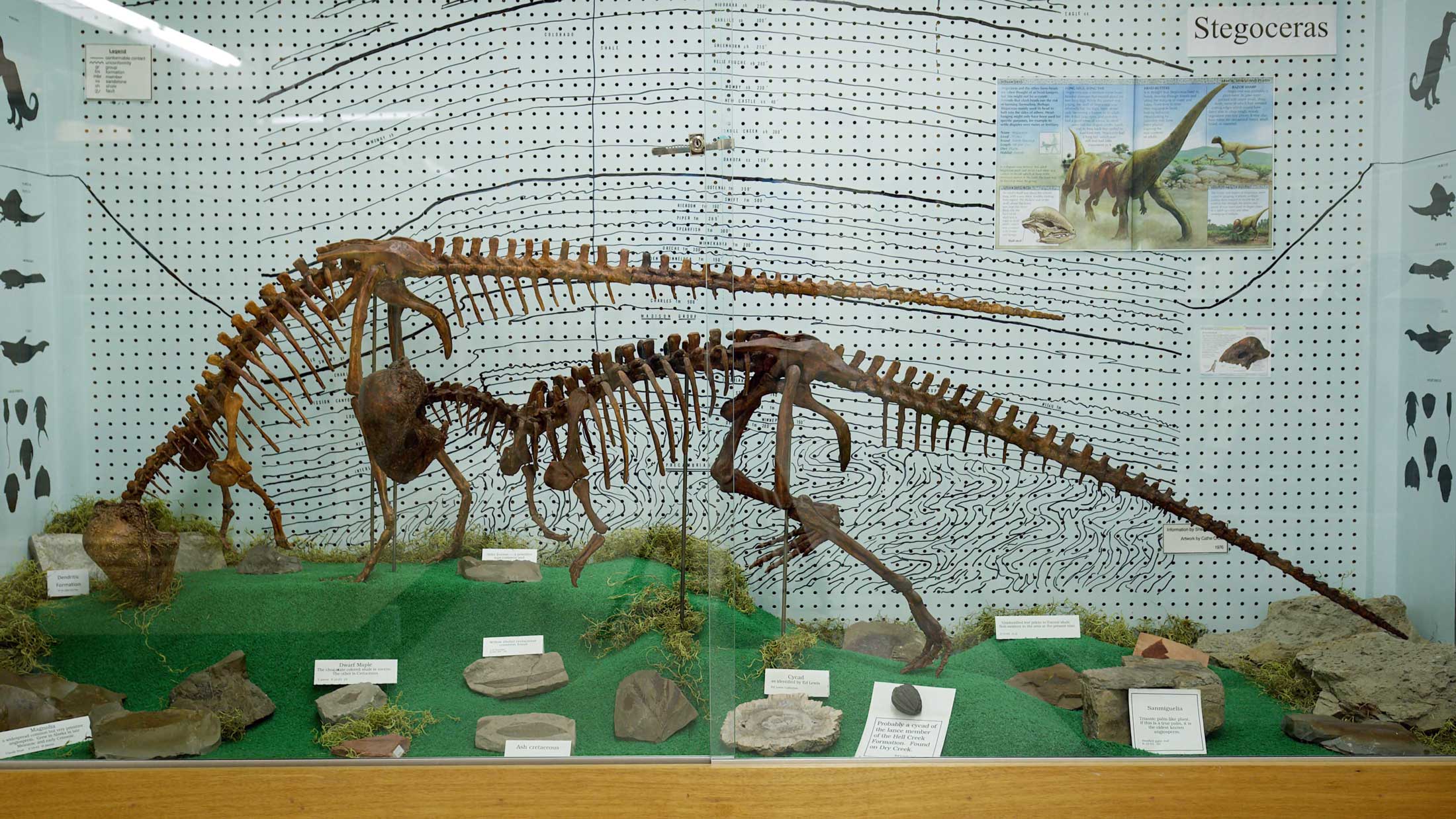
Start at the Frontier Gateway Museum on State Street—one of the first official stops on the Montana Dinosaur Trail, and a great place to pick up your Dinosaur Trail passport. The museum’s star resident is Margie, a full-size cast skeleton of a Struthiomimus found near Glendive in the early 1990s. Lean, fast and ostrich-like, Margie was a Cretaceous-era sprinter capable of reaching 50 miles per hour—a very different kind of Montana wildlife. Beyond Margie, the museum’s fossil collection includes Triceratops, Thescelosaurus, hadrosaurs and aquatic fossils, all recovered from the Hell Creek Formation that surrounds the town.
 Courtesy of Frontier Gateway Museum
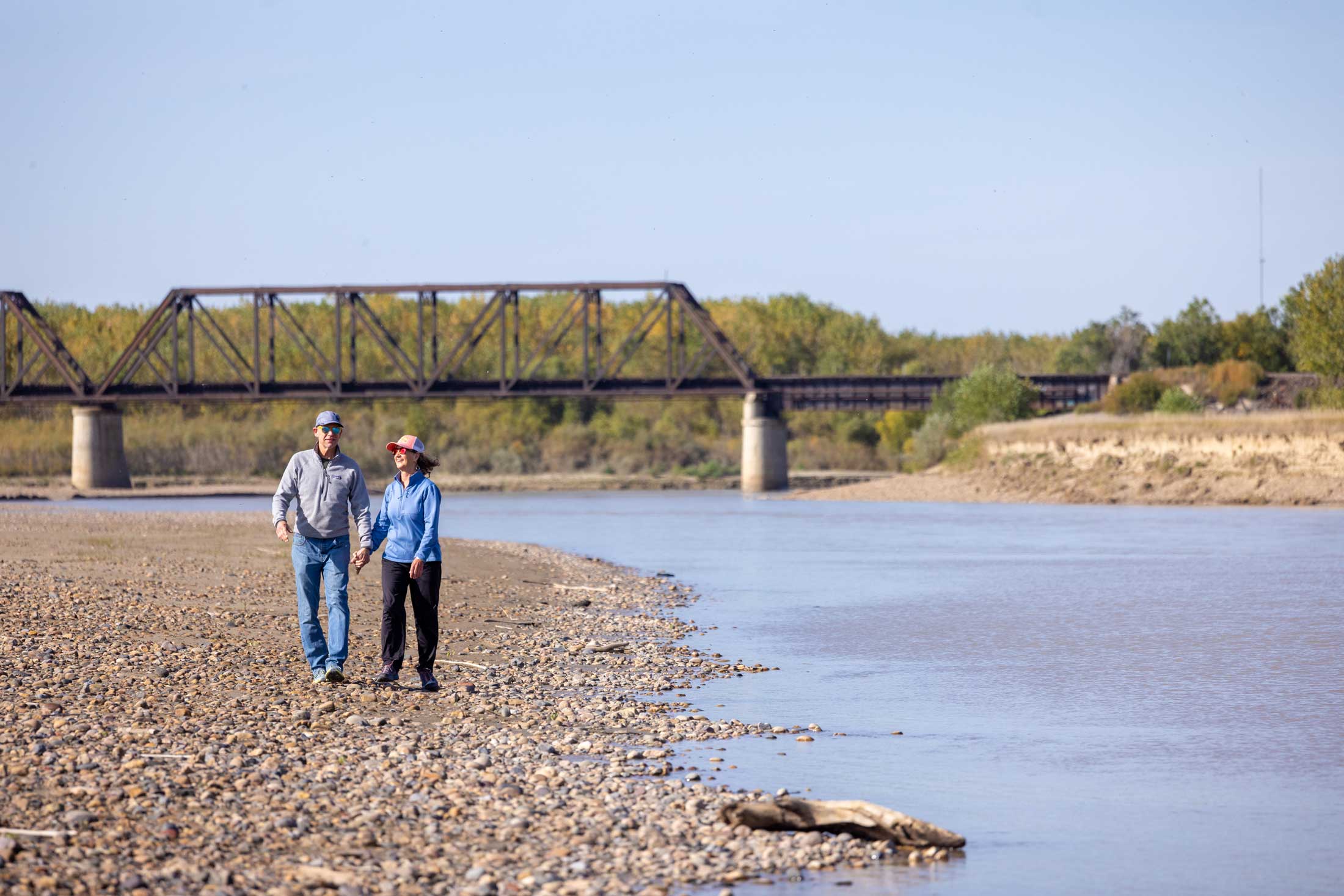
After the museum, take a walk along the Yellowstone River. Glendive is known for its agate hunting along the riverbanks, and the late afternoon light on the water is worth lingering for. Grab dinner in town before heading up into Makoshika State Park for a first look at the badlands as the sky goes golden. The drive takes only a few minutes from downtown, and even from the lower parking areas, the scale of the canyon formations is immediately humbling.
Overnight in Glendive.
 Yellowstone River, Glendive, Nathan Satran Photography
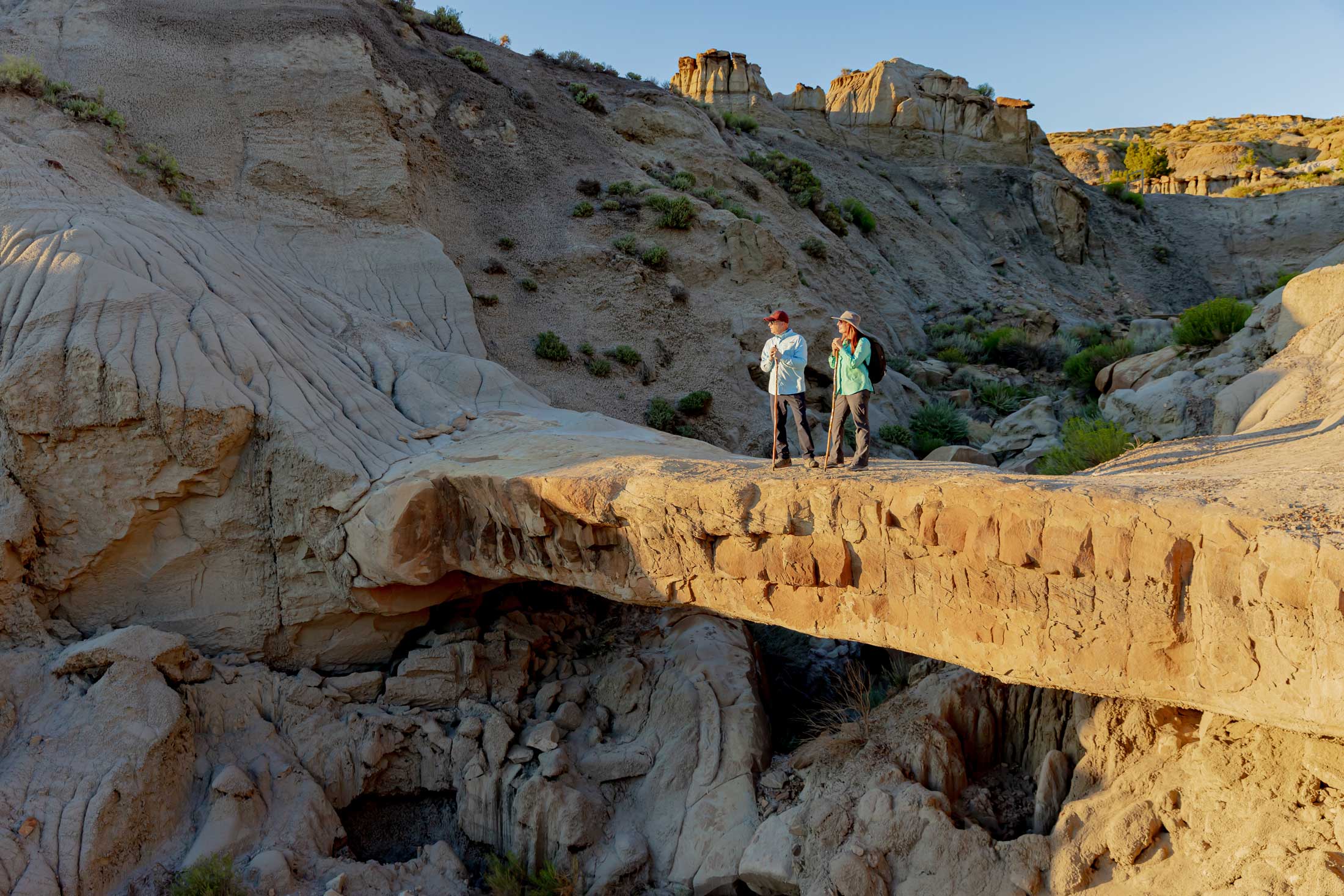
Head back up into Makoshika early. Montana’s largest state park, at over 11,500 acres, takes its name from a Lakota phrase meaning “bad land”—and it earns that name with sweeping hoodoos, eroded caprocks and canyon walls that glow as the morning light shifts. Start at the visitor center, which houses an actual Triceratops skull along with interpretive displays on the Hell Creek Formation and the park’s paleontology history. More than ten species of dinosaurs have been discovered within the park boundaries, and researchers from major institutions—including the Museum of the Rockies and the University of Wisconsin—return here every summer to search for more. Fossils continue to surface as the badlands erode; keep your eyes on the hillsides, but remember that collecting is prohibited in state parks.
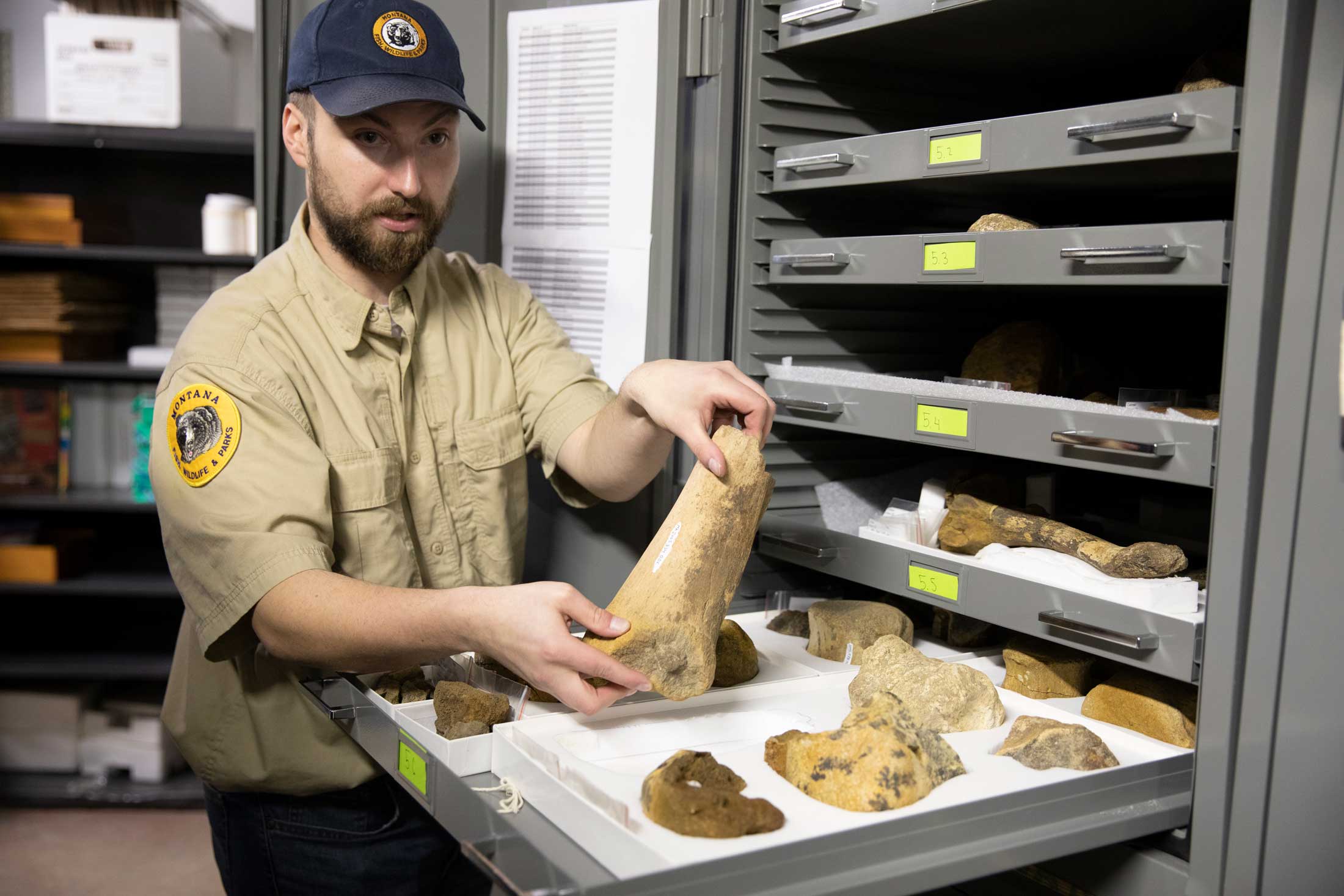 Makoshika State Park Visitor Center, Cassie Solberg
Hit the Cap Rock Trail for a short but rewarding hike to one of the park’s most photogenic formations. If you have more time, the Diane Gabriel Trail loops through the badlands grasslands and climbs to a fossilized hadrosaur on display along the trail. Wildlife watchers should scan the canyon walls for golden eagles, turkey vultures and mule deer, all common in the park.
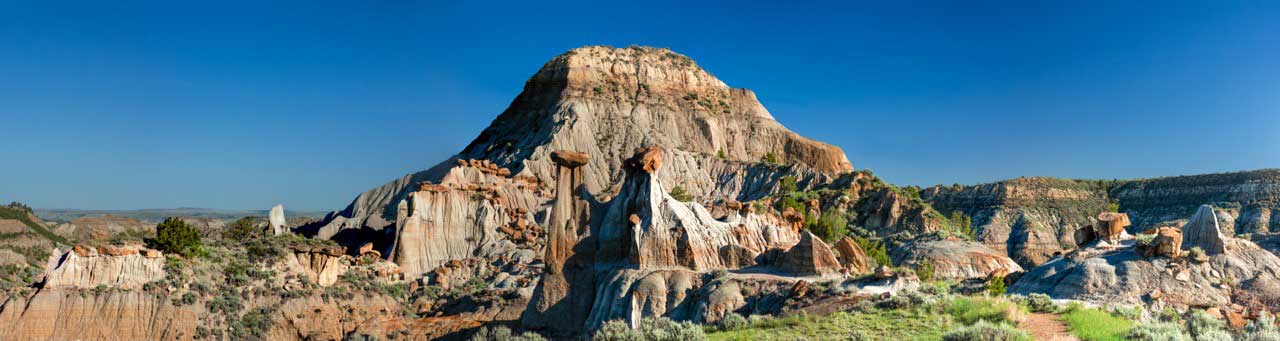 Makoshika State Park, Todd Klassy
Before you leave Glendive, stop for a meal and take one more pass along the river. This town rewards a little lingering.
Also nearby on the Montana Dinosaur Trail: Carter County Museum in Ekalaka (106 miles, 1.75 hours via I-94 east to Wibaux, then MT Highway 7 south).